Enjoy FREE SHIPPING on orders above ₹ 999/-
Enjoy FLAT 10% OFF | Use Code : MYNATURAL10

Benefits of Kodo Millet
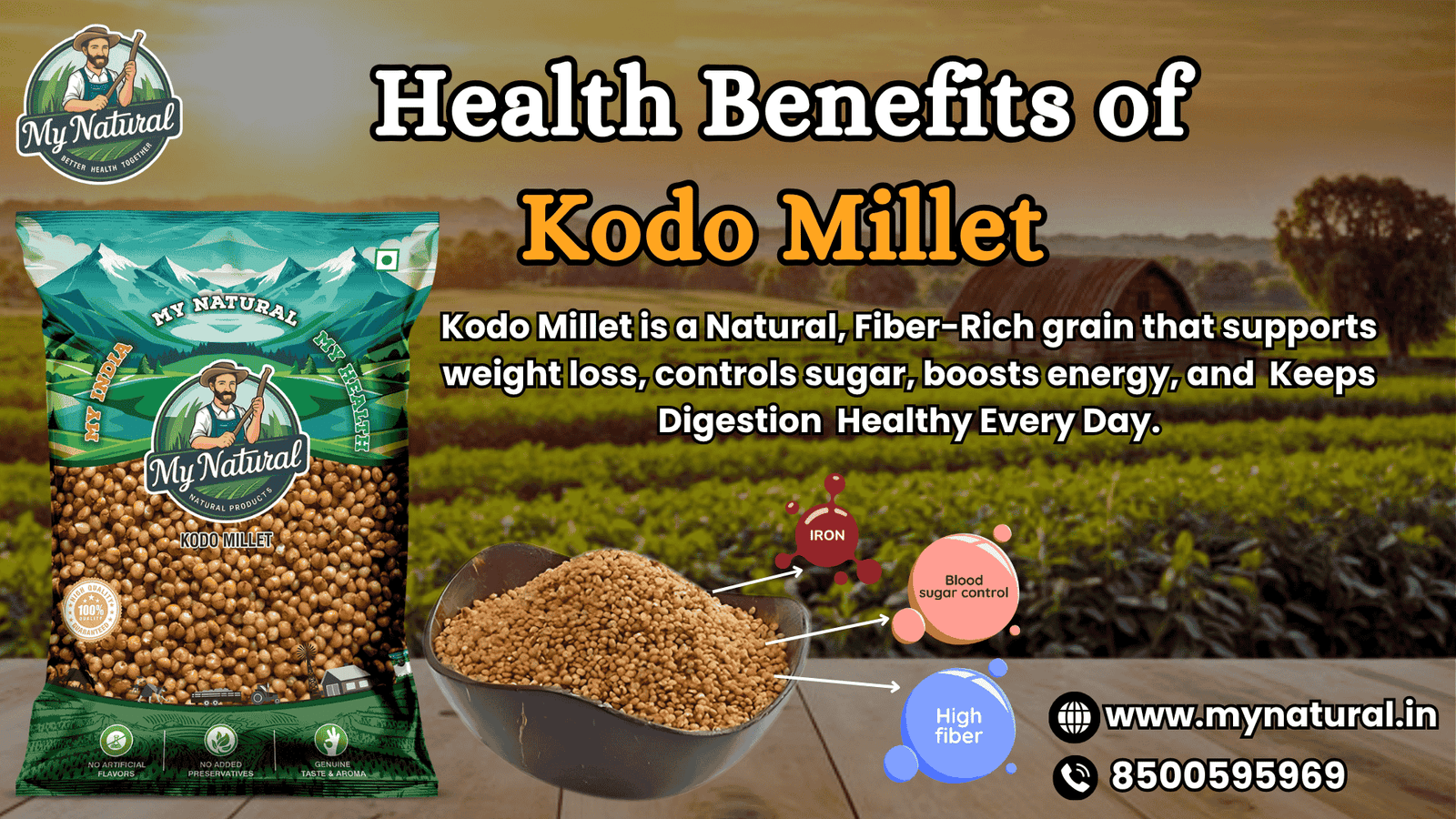
Kodo millet is a gluten-free, high-fiber Indian millet that supports weight loss, diabetes control, heart health, and better digestion while fitting easily into daily meals like idli, dosa, khichdi, and salads. It has a naturally low glycemic impact, good fiber, and useful minerals, making it a smart swap for white rice in many Indian homes.
Section: What Is Kodo Millet?
- Kodo millet (kodra/varagu/arka) is a small-grain cereal grown in India that cooks fast and tastes mild.
- It is gluten-free and rich in dietary fiber, making it easy to add to breakfast, lunch, and dinner.
- It suits Indian cooking: dosa/idli batter blends, pulao, veg upma, curd rice style bowls, and lunchbox recipes.
Why Choose It Over White Rice?
- White rice is easy to digest but low in fiber; kodo millet gives longer fullness and steadier energy.
- Use it 2–4 times a week by replacing part or all of the rice in meals.
- Great for families managing weight and blood sugar without drastic diet changes.
Benefits By Goal
Kodo Millet For Weight Loss
- High fiber helps portion control; use in lunch bowls with dal and sautéed vegetables.
- Swap part of roti/rice with kodo millet 3–4 meals per week.
- Practical plate: 1 cup cooked kodo millet + 1 cup sabzi + ½ cup dal + salad + curd.
Kodo Millet For Diabetes
- Choose steamed/boiled styles over deep-fried snacks.
- Combine with protein (dal, curd, paneer, egg) and vegetables to slow glucose release.
- Meal ideas: millet khichdi (dal + veggies), millet dalia with sprouts, curd millet with cucumber.
Kodo Millet For Heart Health
- Higher fiber and whole-grain patterns support cholesterol management.
- Use low oil and low salt; add garlic, jeera, curry leaves, and green leafy vegetables.
- Try lemon-kodo millet rice with roasted peanuts for a heart-friendly lunchbox.
Kodo Millet For Digestion And Gut Health
- Fiber supports regularity and beneficial gut bacteria.
- Soak and rinse well to improve digestibility.
- Start with small portions if new to millets to avoid gas/bloating.
Kodo Millet For PCOS
- Lower glycemic impact and fiber help with cravings and steady energy.
- Combine with protein (curd/paneer/egg) and good fats (groundnuts/til) for hormone-friendly plates.
- Try millet dosa with paneer bhurji or millet poha with peanuts and veggies.

Nutrition Focus
- Kodo Millet Nutritional Value: Emphasize fiber, complex carbs, and useful minerals (iron, magnesium, B vitamins).
- Kodo Millet Calories per 100g (raw): Approximately in the range of similar small millets. Always position exact numbers contextually with cooking method and portion control.
- Protein Content: Useful for a grain; combine with dal/curd to complete meal protein.
- Fiber Content: Key for satiety, gut health, and metabolic balance.
- Iron Content: Supportive for energy; enhance iron absorption by adding vitamin C sources like lemon, amla, or tomato.
- Vitamins and Minerals: Highlight B vitamins, magnesium, potassium for energy and blood pressure support.
- Antioxidants: Polyphenols support long-term wellness when part of a balanced Indian diet.
- Kodo Millet Nutritional Value: Emphasize fiber, complex carbs, and useful minerals (iron, magnesium, B vitamins).
Core Health Benefits
Fiber Benefits (satiety, weight, gut)
- High fiber keeps you full longer, helps portion control, and reduces untimely snacking.
- Supports gut regularity and better digestion, easing constipation and bloating.
- Good for busy professionals and students who need steady energy for long hours.
Low Glycemic Impact
- Compared to refined grains, kodo millet digests slower, helping avoid sharp blood sugar spikes.
- Works well for diabetics when combined with protein/vegetables in balanced meals.
- Ideal for diabetic-friendly dosa/idli batter mixes, millet khichdi, and curd millet bowls.
Minerals That Matter
- Provides useful amounts of iron, magnesium, and B vitamins that support energy, heart rhythm, and metabolism.
- Magnesium and potassium support normal blood pressure when paired with a low-salt diet.
- Iron-rich plates help busy adults and women manage fatigue and low energy days.
Antioxidants And Whole-Grain Goodness
- Whole-grain polyphenols support heart and metabolic wellness as part of a varied, home-style diet.
- Replacing refined grains with whole millets a few times a week improves overall meal quality.
- Pairs well with Indian spices, dals, and seasonal vegetables for a nutrient-dense plate.
Who Should Buy This
- Diabetics and prediabetics planning better breakfasts and lunches.
- Weight-loss seekers who need simple, filling Indian meals.
- Working professionals wanting steady energy and easy lunchboxes.
- Homemakers planning monthly groceries with healthier staples.
- Athletes and fitness enthusiasts needing complex carbs and protein pairing.
- Bulk buyers: hostels, canteens, gyms, offices.
Buying Guide And Storage
- Look for clean, uniform grains from trusted sellers.
- Rinse thoroughly; store in an airtight jar in a cool, dry place.
- Finish within 3–4 months for best taste; buy monthly or bi-monthly.
Small Comparison Table
Here is the single, compact comparison table requested.
| Grain | Fiber (qualitative) | Gluten | Typical Indian uses | Notes |
|---|---|---|---|---|
|
Kodo millet |
High |
Gluten-free |
Dosa, idli blend, khichdi, pulao |
Good for weight/diabetes goals |
|
White rice |
Low |
Gluten-free |
Everyday meals |
Easy to digest, low fiber
|
|
Wheat (atta) |
Moderate |
Contains gluten |
Roti, paratha |
Familiar, protein pairing helps
|
|
Quinoa |
High |
Gluten-free |
Salads, bowls |
Higher cost, complete protein |
How To Use Kodo Millet Daily
- Soaking & Cooking: Rinse 2–3 times. Soak 30–60 minutes for softer texture. Use 1:2.25–2.5 water, simmer until fluffy. Rest 5 minutes.
- Portion Guide: Start with ½–1 cup cooked per meal, depending on activity and goals.
- Combine Smart: Always add dal/curd/egg/fish/chicken and vegetables for balance.
- Weekly Plan: Use 3–5 times a week in rotation with other whole grains.
Kodo Millet Versus Other Staples
- Kodo millet vs rice benefits: fiber higher, steadier energy; rice more familiar, faster digestion.
- Kodo millet vs quinoa: quinoa has complete protein; kodo is local, more affordable, easy in Indian recipes.
- Kodo millet vs wheat: wheat has gluten; kodo is gluten-free; both can fit a diverse diet.
- Kodo millet vs little millet: both are small millets with similar uses; choose based on taste and availability.
- Best millet for weight loss: pick higher fiber millets (kodo, foxtail, barnyard); rotate for variety.
Millets for diabetes control: focus on portion size, fiber, and mixed plates; kodo fits well.
Easy Indian Recipes
Kodo Millet Breakfast Recipes
- Upma: Temper mustard, urad, chana dal, curry leaves, onion, carrot, beans; add soaked kodo millet; cook till fluffy. Pair with curd.
- Idli/Dosa Batter Blend: 50% kodo millet + 50% rice/urad blend; ferment overnight. Great for diabetics/weight management.
- Sweet Dalia: Jaggery, cardamom, milk or coconut milk; add nuts and raisins for kids.
Kodo Millet For Weight Loss Recipes
- Lemon Millet Rice: Cooked kodo + tadka of mustard, curry leaves, green chilli, turmeric, lemon; add roasted peanuts for crunch.
- Millet Salad Bowl: Warm millet + cucumber, tomato, onion, sprouts, lemon, salt, pepper; add curd or paneer for protein.
Kodo Millet For Diabetes Recipes
- Veg Khichdi: 1:1 millet:moong dal + carrots, beans, peas; jeera, hing, ginger; serve with salad/curd.
- Curd Millet Bowl: Cooked millet + curd + grated cucumber + roasted jeera powder.
Kodo Millet Family Lunch/Dinner
- Millet Pulao: Whole spices, onion, mixed veggies; serve with raita.
- Sambar Millet: Replace white rice with kodo and serve with sambar and poriyal.
Kodo Millet Dosa Benefits
- Better satiety and steadier energy.
- Good for diabetic-friendly breakfast with chutney and sambar.
- Kid-friendly when paired with potato masala or paneer bhurji.
Kodo Millet Porridge Benefits
- Gentle on stomach when cooked soft.
- Suitable for elderly and post-illness meals with curd or dal water.
Buyer And Practical Querie
Kodo Millet Side Effects
- Switching too quickly from low-fiber to high-fiber may cause gas/bloating; increase slowly and hydrate.
- Very high portions may not suit all; keep balance with protein and vegetables.
Who Should Avoid Kodo Millet?
- Those with specific medical advice restricting high-fiber or whole grains should consult a doctor or dietitian.
- If prone to thyroid issues, keep overall millet rotation varied; avoid relying on only one millet daily.
Kodo Millet Daily Intake
- For most adults: ½–1 cup cooked per meal, 1–2 meals per day, 3–5 days per week, within a balanced Indian diet.
Kodo Millet GI Score
- Positioned as lower glycemic than refined grains; real-world impact depends on portion size, cooking style, and what else is on the plate.
Kodo Millet For Athletes
- Works as a complex-carb base for training meals; add eggs, paneer, fish, or dal for protein.
- Good for pre-game lunch bowls with vegetables and curd.
Kodo Millet As A Sustainable Crop
- Millets generally need less water and grow in varied Indian climates, supporting local farmers and resilient food systems.
Short FAQ's
- Is kodo millet good for weight loss? Yes; high fiber helps fullness and portion control when used with vegetables and protein.
- Is kodo millet good for diabetics? Yes; lower glycemic impact than refined grains when eaten in balanced plates.
- Benefits of eating kodo millet daily? Better satiety, steadier energy, fiber support for digestion; rotate with other whole grains.
- Kodo millet benefits for females? Useful fiber and iron support; add vitamin C foods for better iron absorption.
- Kodo millet benefits for skin and hair? Whole-grain nutrients and protein pairing support general skin and hair wellness.
- Kodo millet benefits and side effects? Benefits: fiber, GI, minerals; side effects: temporary gas if increased too fast.
- Kodo millet benefits in Ayurveda? Commonly positioned as supportive for digestion, energy, and balanced meals with spices.
Safety Notes
- This guide is written for Indian households using practical meals and real-life portions.
- Nutrition varies by brand and cooking method; consult a dietitian for medical conditions.
- Introduce gradually if shifting from low-fiber to high-fiber meals.
Recap
- Kodo millet is an easy, Indian-friendly swap that supports weight, blood sugar, digestion, and heart goals.
- Use it in dosa/idli blends, khichdi, pulao, curd bowls, and salads 3–5 times a week.
- Balance with dal/curd/eggs/fish/chicken and plenty of vegetables for best results.
👉 Switch to Natural & Unpolished Kodo Millets today for a healthier tomorrow.
Visit: mynatural.in
And we offer natural pulses, millets, rice, flours, and cold-pressed oils—thoughtfully sourced and minimally processed.
Call: 8500595969 for bulk organic orders.
Easy to Buy Online
👉 Click here to order Natural Kodo Millet from My Natural
👉 Click here to order Natural Kodo Millet from Amazon
FAQ's
Can kodo millet help lower cholesterol and support heart health?
Yes—its high fiber and polyphenols support fullness and better portion control; pair with dal/curd and veggies 3–5 times a week for best results.
Kodo millet vs rice: which is better?
Yes—millet-based meals can lower post-meal spikes and improve glycemic control when eaten in balanced plates with protein and vegetables.
What is the glycemic index of kodo millet?
Kodo millet is generally categorized as lower glycemic than refined grains; actual impact depends on portion size, cooking method, and meal composition.
What are the benefits of eating kodo millet daily?
Better satiety, steadier energy, fiber-supported digestion, and supportive effects on lipids and blood pressure when part of a balanced diet.
Is kodo millet gluten free?
Yes—kodo millet is naturally gluten free, making it suitable for gluten-avoidant diets when processed in gluten-safe facilities
What is the nutritional value of kodo millet per 100g?
Kodo millet provides complex carbs, useful protein, dietary fiber, and minerals like iron and magnesium; exact values vary by source and processing
How to cook kodo millet properly?
Rinse well, soak 30–60 minutes, and cook at roughly 1:2.25–2.5 (grain:water) until fluffy; rest 5 minutes before serving.
Are there any side effects of kodo millet?
A sudden fiber increase can cause gas/bloating; increase gradually and hydrate, and note rare reports of “kodo poisoning” linked to mold contamination in improperly stored grain
Kodo millet vs rice: which is better?
Kodo millet offers more fiber and steadier energy, while rice is familiar and easy to digest; many households rotate both to balance taste and nutrition
Can kodo millet help lower cholesterol and support heart health?
Millet-rich diets have shown improvements in lipid profiles and blood pressure, supporting heart health as part of a low-salt, balanced diet.