Enjoy FREE SHIPPING on orders above ₹ 999/-
Enjoy FLAT 10% OFF | Use Code : MYNATURAL10

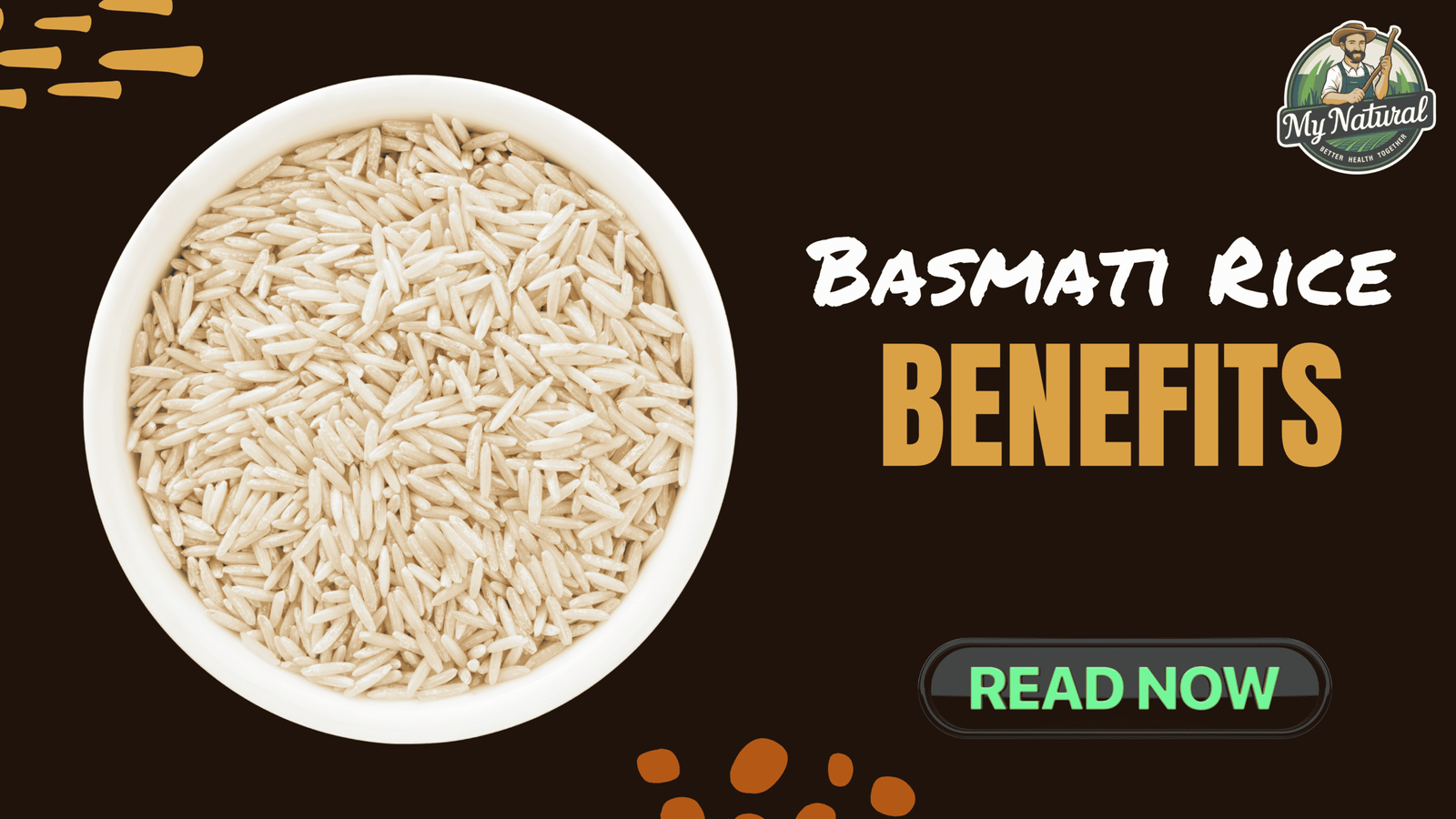
Basmati Rice Benefits
Introduction
If you’re shopping for groceries in India—whether you’re in Hyderabad, Bangalore, Chennai, or Vizag—you’ve probably wondered: Is basmati rice really better than regular rice? Does it support your family’s health, help with diabetes, or make meal prep easier?
This comprehensive guide explains everything you need to know about basmati rice benefits, answering the most common questions Indian families have. You’ll discover:
- Why basmati rice is unique among Indian grains.
- How it supports your long-term health and happiness.
- Practical ways to use it—across daily meals, kids’ lunchboxes, and festive feasts.
- How to recognize and buy the best quality rice for your home.
By the end, you’ll feel confident choosing, cooking, and enjoying basmati rice as a core part of your family’s healthy lifestyle.
What is Basmati Rice?
Basmati rice is a variety of long-grain rice, famous for its distinct aroma, slender shape, and delicate flavor. “Basmati” literally means fragrant in Hindi—a nod to its irresistibly sweet, nutty smell.
Real-Life Example:
Imagine shopping in a Hyderabad supermarket: you see many rice options—regular short-grain rice, red rice, Sona Masuri, and different basmati packets. You pick up a bag of basmati and instantly notice the long grains and gentle aroma, even through the sealed pack. That’s what sets basmati apart.
Key Features:
- Long, Slender Grains: Stays fluffy and separate after cooking, never sticky.
- Signature Aroma: Even raw rice gives off a floral, nutty smell.
- Tradition: Used in classic dishes like Hyderabadi biryani, pulao, and royal feasts.
- Variety: Available as white basmati (polished), brown basmati (unpolished/whole grain), and even organic options.
Why Do Families Prefer It?
For busy professionals, working couples, and homemakers in India’s Tier 1 and Tier 2 cities, basmati rice is chosen for its:
- Quick cooking time.
- Universal appeal (loved by kids and elders alike).
- Ability to elevate both daily meals and festival spreads.
Compatibility with diabetic-friendly and healthy diets—especially brown basmati.
For busy professionals, working couples, and homemakers in India’s Tier 1 and Tier 2 cities, basmati rice is chosen for its:
- Quick cooking time.
- Universal appeal (loved by kids and elders alike).
- Ability to elevate both daily meals and festival spreads.
- Compatibility with diabetic-friendly and healthy diets—especially brown basmati.
Why Basmati Rice Matters in Indian Households
In India, rice isn’t just food—it’s tradition, comfort, and family. Basmati rice is especially prized during celebrations, Sunday family lunches, and even weekday meals where taste and presentation matter.
Cultural Significance
- Biryani Central: In Hyderabad, basmati is the heart of a good biryani—a symbol of hospitality.
- Weddings & Festivals: Used in pulao, jeera rice, and kheer during special occasions from Chennai to Delhi.
- Daily Staple: Urban and semi-urban families, especially in Bangalore and Vizag, now favor brown basmati for health and taste.
Health & Lifestyle Relevance
- Rising Diabetes and Obesity: According to Indian health data, urban populations see higher rates of diabetes and prediabetes, with Hyderabad and Bangalore ranking among the top cities. Smart carb choices like brown basmati help manage blood sugar and weight.
- PCOD and Thyroid: Female health issues—PCOD and hypothyroid—are linked to random blood sugar spikes. Basmati’s low glycemic index means slower sugar release, helping women and teens manage these conditions.
- Children’s Nutrition: In Vizag and Chennai, mothers use brown basmati in lunchbox pulaos to give kids longer-lasting energy and more dietary fibre.
- Fighting Food Adulteration: Many Indian families worry about pesticides and chemical residues in rice. Choosing certified, chemical-free basmati from trusted sources like My Natural provides peace of mind.
Quick Data:
- Brown basmati has a glycemic index (GI) of 50–58, compared to 70+ for regular white rice.
- A 1-cup serving of cooked brown basmati offers 3.5g fibre, 4g protein, and steady-release energy—supporting busy lifestyles.
In short: With disease rates climbing and food quality concerns on the rise, basmati rice is a powerful way to eat clean and feel better, every day.
Key Benefits of Basmati Rice
Health Benefits
- Low Glycemic Index (GI): Ideal for diabetics and weight-watchers. Helps keep blood sugar stable, reducing cravings and energy crashes.
- Rich in Dietary Fibre: Especially unpolished brown basmati, supporting smooth digestion and regular bowel movements.
- Good Protein Source: Each cup provides about 4g of plant protein.
- Gluten-Free: Suitable for people with gluten intolerance or wheat allergy.
Lifestyle and Practical Benefits
- Aromatic & Tasty: Enhanced flavor makes even simple meals special. A plain dal-chawal is richer and more aromatic with basmati.
- Easy to Cook: Minimal prep; quick soaking (15–20 minutes) brings fluffy results—ideal for busy Indian kitchens.
- Long Shelf Life: Stays unspoiled for 6–12 months in airtight containers, especially important in humid cities like Chennai or Hyderabad.
- Affordable Luxury: Available from ₹60/kg (standard) to ₹150/kg (premium/organic), fitting every budget.
Environmental and Safety Benefits
- Eco-Friendly Packaging: Many brands, including My Natural, avoid plastic and use jute or paper packs.
- Certified Clean: FSSAI and organic labels guarantee zero adulteration and maximum safety.
Day-to-Day Benefits (With Examples):
- Sustained Energy: Great for school kids in Bangalore who need lasting energy until afternoon classes.
- Family-Friendly: Mild flavor works for toddlers, adults, and elders alike.
- Meal Variety: Biryani on Sunday, lemon rice on Monday, and pulao for kids’ tiffins—all with the same rice base.

How Basmati Rice Works / What to Expect
Sourcing and Processing
At My Natural, we partner directly with Indian farmers—especially from northern states like Haryana and Punjab. Grains are harvested, sun-dried (reducing moisture/adulteration risk), and sent for minimal yet careful cleaning and grading.
- Cleaning: Removes stones, husks, and dust without chemical bleaching.
- Packaging: Vacuum-sealed, eco-conscious packaging preserves aroma and nutrition.
- Delivery: Shipped fresh and fast across Tier 1 and Tier 2 cities.
Cooking & Meal Prep
You can follow a few simple steps for perfect results:
- Rinse: Rinse once or twice to remove dust, but don’t over-wash.
- Soak: For white basmati—soak 15 minutes. For brown, soak 25–30 minutes to soften the bran layer.
- Cook: Use 1:2 ratio (1 cup rice : 2 cups water). For biryanis, use a wider pot for fluffiness.
Meal Prep Ideas
- Pressure Cooker Pulao: Add vegetables, masalas, and pre-soaked basmati—ready in 15 minutes.
- South Indian Variety Rice (Lemon/Tamarind): Couples or working mothers in Chennai prep a big batch for the week.
- Salad Bowls: Cool, cooked basmati tossed with boiled chickpeas and veggies—a favourite among health-conscious young professionals.
Visual Tip
True basmati grains triple in length and remain unbroken, with a distinct floral aroma—making your thali or meal spread look and taste like a restaurant feast at home.
Common Use Cases or Recipes
South Indian Dishes
- Lemon Basmati Rice: Boil basmati, temper with mustard, curry leaves, turmeric, and lemon. Packed in Vizag school lunchboxes.
- Curd Basmati Rice: Cool cooked rice with curd, grated carrot, and tadka—refreshing in Chennai summers.
- Tomato Rice: Saute tomato and spices, mix with basmati for a quick dinner.
North Indian Dishes
- Rajma-Chawal: Use basmati for fluffy, separate grains that soak up gravies.
- Jeera Rice: Fry jeera in ghee, add cooked basmati. Served in every Bangalore restaurant.
- Paneer Biryani: For festival/family get-togethers in Hyderabad or Vizag.
Festive & Special Meals
- Hyderabadi Biryani: Only aged basmati delivers authentic flavor—soaked, layered, and dum-cooked.
- Sweet Kheer: Use brown basmati for a fibre-rich dessert. Perfect for Diwali or Sankranti.
Healthy Tiffin & Meal Examples
- IT workers in Bangalore batch-cook mixed vegetable pulao every Monday morning.
- Homemakers in Hyderabad prep coconut rice on Friday for temple offering/prasadam.
- Health enthusiasts in Chennai enjoy brown basmati “Buddha bowls” for lunch.
Tips to Choose the Right Basmati Rice
- Look for Grain Length: The best basmati has long, unbroken grains.
- Check Aroma: Real basmati is fragrant (you can test in-store by gently squeezing the packet).
- Prefer Brown or Organic: Higher nutrients, no chemical residues.
- Check Certification: FSSAI mark, “organic” label, or trusted brands like My Natural.
- Check Packaging: Airtight, non-plastic packaging is best for Indian conditions.
- Buy in Small Batches: If you live in coastal cities, buy monthly to avoid moisture/humidity spoilage.
- Proper Storage: Use glass or steel containers. Avoid damp kitchens—especially during Chennai monsoons.
Common Mistakes to Avoid
- Washing rice too much (removes nutrients).
- Using too much water (makes it mushy).
- Buying from unverified sources (risk of adulteration).
How My Natural Delivers Quality
- Sourcing: Our basmati rice is only sourced from reputed, certified farms in northern India—the zone famous for the world’s best basmati.
- Processing: Milled, hand-graded, and packed in dust-free, hygienic conditions.
- Packaging: 100% eco-friendly, tamper-proof. Keeps rice fresher for longer.
- Delivery: Fast, safe delivery to all major cities—Hyderabad, Bangalore, Chennai, Vizag, and more.
- Customer Stories:
- “I trust My Natural for my family’s monthly rice needs. Their basmati rice improved my blood sugar control.” — Manoj, Hyderabad
- “Sunday biryani never tasted better—so aromatic and fluffy!” — Radhika, Hyderabad IT professional
- “I trust My Natural for my family’s monthly rice needs. Their basmati rice improved my blood sugar control.” — Manoj, Hyderabad
- Offers and Support:
- Flat 10% discount on your first order, combos for families, and assured free delivery.
- Bulk discounts for hostels, communities. Call 8500595969 for custom orders or queries.
- Flat 10% discount on your first order, combos for families, and assured free delivery.
- Trust Points:
FSSAI certified, organically processed.
Final Thoughts or Next Steps
Basmati rice is more than just a meal base—it’s a smart health choice, a tradition-keeper, and a crowd-pleaser. By choosing naturally sourced, minimally processed basmati from a reliable brand like My Natural, you ensure every meal is nutritious, aromatic, and safe.
Ready to upgrade your rice experience?
Explore the best basmati rice and grocery combos at My Natural, and discover a new level of taste and health for your family. Want to order in bulk or need a rice expert’s advice?
Call 8500595969 now for personal support and great offers!
FAQ’s
1. Is basmati rice healthier than regular rice?
Yes, especially varieties like brown basmati. It has a lower glycemic index compared to most common white rice, provides more fiber, B vitamins, antioxidants, and essential minerals, and is less processed, making it a better choice for heart health, weight control, and blood sugar management.
2. Can people with diabetes eat basmati rice?
Basmati rice (especially brown/whole grain) has a low-to-medium glycemic index (GI 50–58), so it’s often recommended in moderate portions for people with diabetes, as it causes slower, steadier rises in blood sugar compared to regular rice.
3. Is basmati rice gluten-free?
Yes, 100% basmati rice is naturally gluten-free, making it suitable for those with gluten intolerance or celiac disease.
4. What are the main health benefits of basmati rice?
Key benefits include supporting healthy digestion, being rich in fibre, aiding weight management, improving heart health, lowering cholesterol, and providing sustained energy. It also contains antioxidants and important nutrients like magnesium, zinc, and folic acid.
5. How can you tell if your basmati rice is genuine/pure?
Check for long, slender grains, rich aroma (even when uncooked), and FSSAI or organic certification. Reputable brands (like My Natural) provide better guarantees against adulteration.
6. Does basmati rice take longer to cook?
No, basmati cooks quite quickly, especially if soaked for 15–30 minutes before cooking. In pressure cookers, it’s ready in 1–2 whistles; on the stovetop, in about 10–15 minutes.
7. Is there a difference between white and brown basmati rice?
Yes. Brown basmati is a whole grain—it retains its bran and germ, offering more fibre, nutrients, and a chewier texture. White basmati is milled and polished, so it’s softer but with fewer nutrients.
8. Can basmati rice help with weight management?
Yes, due to its fibre content and low-to-medium GI, basmati rice promotes satiety, helps control appetite, and supports weight management when eaten as part of a balanced diet.
9. Why does basmati rice have such a unique fragrance and flavour?
Its distinct aroma comes from a natural compound called 2-acetyl-1-pyrroline, which develops through both genetics and the aging process—making it popular for biryanis, pulaos, and festive dishes.
10. What are the best ways to store basmati rice at home?
Store in airtight glass or steel containers in a cool, dry place (especially important in humid Indian cities). Avoid using plastic and keep away from strong-smelling foods to preserve aroma and quality.